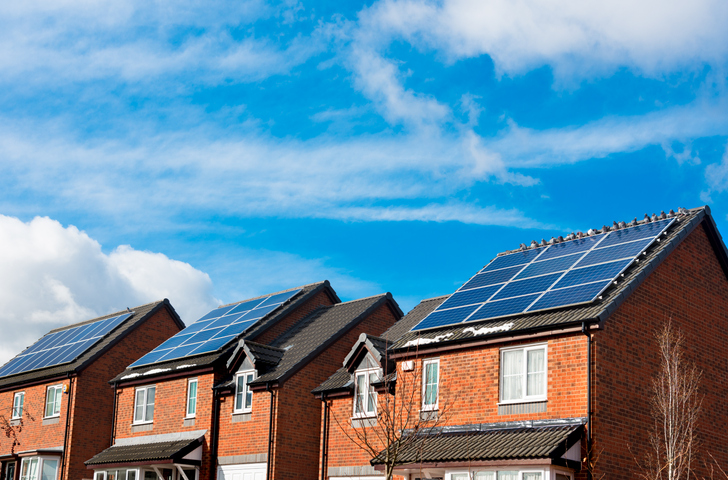
Solar panel batteries, or solar battery storage systems, are a smart way to maximise the energy produced by solar PV panels. By capturing and storing surplus energy, these batteries allow homeowners to access solar power even when the sun isn’t shining—during the night or on cloudy days. Here’s how it works and why it’s beneficial.
During the day, solar panels absorb sunlight, and the photovoltaic (PV) cells convert it into direct current (DC) electricity. This DC energy then flows to an inverter, which transforms it into alternating current (AC), the type of power your home appliances use. If your solar panels generate more electricity than your household needs, the excess energy is stored in a solar battery.
Solar batteries generally use either lithium-ion or lead-acid technology. Lithium-ion batteries are more efficient and longer-lasting, while lead-acid batteries are cost-effective and reliable for smaller systems. Both battery types are specifically designed to handle frequent charging and discharging cycles, making them ideal for renewable energy storage.
Once stored in the battery, this energy can be drawn upon whenever there’s a need for electricity—such as after sunset or during power cuts. This process not only ensures a consistent power supply but also allows homeowners to reduce reliance on the grid, potentially saving on electricity bills.
In essence, solar battery storage is a key component in a sustainable energy solution, letting you optimise the power your solar panels produce and continue to benefit from clean, renewable energy even when the sun isn’t out. Adding a battery to your solar setup is a powerful way to increase energy independence, reduce costs, and contribute to a greener planet.